Tuesday, June 26, 2012

Living the Future


In the teaching of Jesus, the secret to living a right life here is to constantly be considering the future, especially one's future with God.  Jesus' ethical teaching is constantly referring to the future state-- not necessarily "heaven", but the final judgment of God and one's eternal state.  There are three basic principles he refers to:

    a. How we treat others is how God will treat us
    "Judge not lest you be judged" "Forgive and you will be forgiven" "By whatever measure you measure, by that measure you will be measured."  "Enter into the kingdom prepared for you... for when I was a stranger you invited me in."

    b. Whatever we take for ourselves, we will be given the opposite
    "Those who exalt themselves will be humbled, those who humble themselves will be exalted."

    c.  Whatever kind of suffering/comfort we find ourselves in now, we will be living the opposite
     "In your life you received good things and Lazarus evil; even so, now he is comforted and you are in agony."  "Blessed are you who mourn, for you shall be comforted." "Woe to you who are rich for you have already received your comfort; woe to you who laugh now for you shall mourn and weep."

In the end, Jesus' recommendation for us to live beyond the present is to remember the future.  He told us clearly what the future holds (in general terms), if we can remember the future, it will actively change the present.  And this is the most important thing: the point of looking beyond the here and now is to change the here and now.  Because if we do not change the here and now, then our "beyond" will always look the same.

Wednesday, June 13, 2012

Jesus Not Making Sense


Jesus had been harshly judged by the officials from Jerusalem.  Until this point, there might have been a possibility that the politicians in Jerusalem might have accepted him as King.  But not now.  Jesus recognized this, and was prepared for this—saying ahead of time that God’s people would be rejected and persecuted.  Because of their rejection of his clear message, the Father determined that they must be judged. 
However, the judgment was not one of destruction—rather, it was one of ignorance.  Now they would not be allowed to understand the message Jesus came to teach.  It is at this point that Jesus began to teach everything in parables—to keep people ignorant of God’s truth.  Those who truly desired to understand Jesus would come and ask him, or be his disciple, to whom Jesus explained all things.  But to everyone else, these would just be stories and the truth would be hidden.

Jesus told this parable: “A farmer took his seed and scattered it everywhere.  Some of the seed landed on the hard road, beside the field that never planted properly and birds came and ate it all up.  Some of the seed grew up among thorns, and as they grew the thorns sucked all of the seeds’ water, and they died.  Some of the seed grew up among the rocks, and the plants had shallow roots, and so when the days grew hot, the plants withered.  But some seed was planted in good soil and it grew up and produced abundant fruit.”

            Jesus told another parable: “The kingdom of God is like a mustard seed.  It is only a tiny seed, but after it is grown, it becomes huge and all the birds will rest under its branches.  The kingdom of God is also like a man who plants a field and waters it.  He waits, and the plants grow up—but he does not know how.”

            The crowds were completely confused now, so Jesus told one more: “A man planted a vast field.  In the middle of the night, his enemy planted weeds that look just like the grain in the midst of the field.  As the plants grew, the man’s slaves came to the man and said, ‘There are weeds among the grain! Should we pull them up?’  The man replied, ‘My enemy has done this.  Let the plants grow up, because if you pull the weeds up now, you will also pull up some of the grain.  When they are all grown, then I will have you pull them all up and we will separate them.  The weeds we will burn, but the wheat we will bring into the barn.’”

            Jesus’ disciples were also confused, so when they were alone with Jesus they asked, “Could you please explain these parables?”  Jesus replied, “The crowds aren’t supposed to understand them, but you are given the meaning of the parables. 

            “This is the meaning of the parable of the soils:  The seed is the word of God about the kingdom, and the farmer is the evangelist.  Some people hear the word and reject it immediately—these are like the seed on the road.  Satan comes and steals the word out of their hearts.  The seed in thorny ground are those who hear the word and receive it, but they are too concerned with the things of this world—possessions and concerns and money—and so they do not abide in the word.  The seed among the rocky soil are those who accept the word, but then they are rejected and persecuted and so do not continue in it.  The seed in good soil are those who abide through all the difficulties and worries to remain in the word to bear abundant fruit.

            “This is the meaning of the mustard seed: The kingdom of God begins very small, but in the end, it will be the ruler of all the nations of the world.  Also, the kingdom of God is going to grow huge—but it will do so by the power of God.  Although I send you out to spread the word, you will not cause the kingdom to grow, only God will.

            “This is the meaning of the parable of the weeds: The field is God’s people, and the owner is the Father.  Satan has placed false worshippers of God in the midst of God’s people.  But the Father is not judging them all now.  Rather, he will wait until the end of the age, and then he will send out his angels to separate the good from the evil.  The evil will be punished in eternal fire, but the righteous will come into the kingdom of God and live in blessing forever.”

            Jesus also placed a riddle around himself.  He called himself “Son of Man” which no one knew what it meant.  Most thought he was just calling himself a prophet, like Ezekiel did.  One day, Jesus told the crowds, “Your fathers ate manna in the wilderness, and they all died.  But I am the bread of life that comes from heaven.  Whoever eats my flesh will never die.”  The crowd wondered, “How can he give us his flesh to eat?”  Then Jesus said aloud, “Truly I say to you, unless you eat the flesh and drink the blood of the Son of Man, you have no life.” 

Many of his disciples heard this and said, “Who can abide this kind of teaching?”  Some of his disciples ceased following Jesus at this point.  Jesus then looked at the twelve and said, “Are you going to leave too?”  Peter answered, “Who else can we go to?”  And they remained.

Wednesday, June 6, 2012

Paul the Apostle on Religion and Jesus


You used to be dead to God due to your non-religious lifestyle and because you didn’t belong to the right church.  Jesus made you alive, putting you in His resurrection, forgiven us of all our religious inadequacies.  Religion has a list of our inadequacies before God, and they said that we owed God because of these inadequacies and they fought against us due to them.  But Jesus took that list and nailed it to the cross to show that it was their list that was inadequate.  Jesus’ death ridicules the religious authorities and laws and policies and his resurrection shows them all to be a mockery.

So don’t let anyone judge you by their standards: by the church you go to, the holidays you celebrate, the day you worship God, what you eat or drink—all of those things are insubstantial compared to the Reality of the King.   Don’t let anyone convince you that you are spiritually inadequate because you haven’t had the “right” spiritual experience, or  you haven’t sat under the “right” teacher, the importance of which they inflate in their own human mind.  Instead, cling to the true Lord, the Head which supplies and provides all the other parts of the body,  which grows by God’s power.  If you have died in Christ, don’t submit to any other spiritual “law”, which are of the world, as if you were still living apart from God.   The religious laws of “do not drink” “stay away from the opposite sex” “don’t partake in pleasure” “don’t eat this kind of food” are all rules that show their inadequacy as we use them.  Don’t live according to these human commandments.  Yes, they seem wise and powerful, but they are religious inventions for the sake of self-abasement and harsh treatment of our bodies, but they have no real value fighting real sin.

So if you have been resurrected in Jesus, seek true heavenly authority, in our King, seated at the right hand of God.  Focus on Jesus, not on earthly authorities. 

A paraphrase of Colossians 2:13-3:1

Wednesday, May 23, 2012

What Do I Do If I Sin?


The time is fulfilled, and the kingdom of God is at hand; repent and believe in the gospel.  Mark 1:15

Do you suppose that those eighteen on whom the tower in Siloam fell and killed them were worse culprits than all the men who live in Jerusalem? I tell you, no, but unless you repent, you will all likewise perish.
 Luke 13:4-5

Whoever causes one of these little ones who believe in Me to stumble, it would be better for him to have a heavy millstone hung around his neck, and to be drowned in the depth of the sea. Woe to the world because of its stumbling blocks! For it is inevitable that stumbling blocks come; but woe to that man through whom the stumbling block comes! If your hand or your foot causes you to stumble, cut it off and throw it from you; it is better for you to enter life crippled or lame, than to have two hands or two feet and be cast into the eternal fire. If your eye causes you to stumble, pluck it out and throw it from you. It is better for you to enter life with one eye, than to have two eyes and be cast into the fiery hell.
 Matthew 18:6-9

A ruler questioned Him, saying, "Good Teacher, what shall I do to inherit eternal life?"  And Jesus said to him, "Why do you call Me good? No one is good except God alone. You know the commandments, 'Do not commit adultery, do not murder, do not steal, do not bear false witness, honor your father and mother.'" And he said, "All these things I have kept from my youth." When Jesus heard this, He said to him, "One thing you still lack; sell all that you possess and distribute it to the poor, and you shall have treasure in heaven; and come, follow Me."
Luke 18:18-22

That which proceeds out of the man, that is what defiles the man. For from within, out of the heart of men, proceed the evil thoughts, fornications, thefts, murders, adulteries, deeds of coveting and wickedness, as well as deceit, sensuality, envy, slander, pride and foolishness. All these evil things proceed from within and defile the man.
Mark 7:20-23


I say to you, any sin and blasphemy shall be forgiven people, but blasphemy against the Spirit shall not be forgiven. Whoever speaks a word against the Son of Man, it shall be forgiven him; but whoever speaks against the Holy Spirit, it shall not be forgiven him, either in this age or in the age to come. Either make the tree good and its fruit good, or make the tree bad and its fruit bad; for the tree is known by its fruit. You brood of vipers, how can you, being evil, speak what is good? For the mouth speaks out of that which fills the heart. The good man brings out of his good treasure what is good; and the evil man brings out of his evil treasure what is evil. But I tell you that every careless word that people speak, they shall give an accounting for it in the day of judgment. For by your words you will be justified, and by your words you will be condemned.
Matthew 12:31-37

Two men went up into the temple to pray, one a Pharisee and the other a tax collector. The Pharisee stood and was praying this to himself: 'God, I thank You that I am not like other people: swindlers, unjust, adulterers, or even like this tax collector. 'I fast twice a week; I pay tithes of all that I get.' But the tax collector, standing some distance away, was even unwilling to lift up his eyes to heaven, but was beating his breast, saying, 'God, be merciful to me, the sinner!' I tell you, this man went to his house justified rather than the other; for everyone who exalts himself will be humbled, but he who humbles himself will be exalted.
Luke 18:10-14

Unless your righteousness surpasses that of the scribes and Pharisees, you will not enter the kingdom of heaven.
Matthew 5:20

But woe to you, scribes and Pharisees, hypocrites, because you shut off the kingdom of heaven from people; for you do not enter in yourselves, nor do you allow those who are entering to go in. Woe to you, scribes and Pharisees, hypocrites, because you devour widows' houses, and for a pretense you make long prayers; therefore you will receive greater condemnation.
Matthew 23:13-14

If you were blind, you would have no sin; but since you say, 'We see,' your sin remains.
John 9:41

Not everyone who says to Me, 'Lord, Lord,' will enter the kingdom of heaven, but he who does the will of My Father who is in heaven will enter.
Matthew 7:21

Truly, truly, I say to you, everyone who commits sin is the slave of sin. The slave does not remain in the house forever; the son does remain forever. So if the Son makes you free, you will be free indeed.
John 8:34-36

Sunday, May 20, 2012

Jesus and the Deep Law

Jesus is all about law.  And he's pretty strict about it, too.

Heck, he sat down on the mount like Moses (just like Moses) and laid down the law.  Being faithful to one's spouse, not condemning, turning the other cheek, giving to the poor, keeping promises, not being a hypocrite.  Serious, difficult stuff.  And he was really serious.  He compared one who listened to his law but didn't obey it to a man who built a really nice house but it got destroyed in a terrible storm.  In case you didn't get it, Jesus was talking about the judgment day.  Yeah, he was saying "you don't obey, there are eternal consequences." Serious stuff indeed.

The question comes into our mind whether there is really any difference between Jesus and the Pharisees.  Jesus himself said, "Unless your righteousness is greater than the scribes and Pharisees you will not enter into God's kingdom."  The scribes were like the Bible professors of their day.  The Pharisees... well, we all know about the Pharisees.  Even the ancient Jews made fun of the Pharisees and their overly strict interpretation of the law.

But Jesus is saying that the Pharisees weren't strict enough.  Is this the guy who forgave the adulteress?  Is this the guy who welcomed sinners into the Kingdom?  Is this the one who said, "I came to seek and save the lost"?  Is Jesus really welcoming the lost when he places such a heavy burden on them?  Come to think of it, isn't he the one who said, "My burden is light"?

Yeah, he is. And there is no contradiction here.  Because as supportive as Jesus is about the law, he is dismissive of it, as well.

Jesus is the one who welcomed his disciples to ignore the Sabbath laws.  In fact, he spoke favorably of a story where David lied and ate the bread that was legally only for the priests.  He ignored the application of the Sabbath law of not doing one's professional labor on a Sabbath.  He openly condemned a law allowing people to give their inheritance to the temple.  He condemned the washing laws.  He dismissed the law of a "certificate of divorce" saying that it was only to court the Israelites "hardness of heart".  And he completely condemned the makers of all of these laws, the Pharisees, the scribes, the priests and the Sanhedrin.  And, we must remember, he broke the priests' law in the temple when he overturned the tables in the Temple.

Why?  Is there any rational sense in this? Absolutely.

You see, Jesus plays favorites with the law.  Some laws are bigger and better than others.


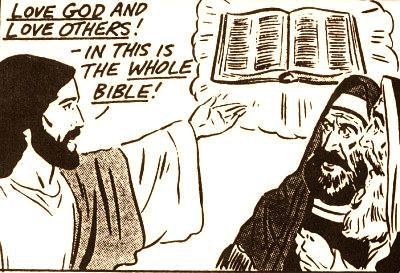
  • Jesus said that the two "greatest" laws are these: "Love the Lord your God" and "Love your neighbor as yourself." 
  • He proclaimed, "Mercy is greater than sacrifice"
  • He denied the Mosaic law to attack one's enemies and proclaimed "Love your enemies."
  • He rejected the command to kill the severe killer and instead said, "Let him who is without sin cast the first stone."
  • And he gave a "new" command: "Love one another."


Jesus' view of the law is that care for others' takes precedent over all other law.

It isn't that he completely dismissed all other laws.  He agreed to pay taxes.  He agreed to have lepers go to the temple to be accepted into the community by the priests.  He agreed that murder, adultery, breaking one's vows and stealing were always wrong.  But if any particular law caused more harm than it relieved, then Jesus dismissed that application of the law.

Laws about the sanctity of bread or a day aren't as important as feeding hungry people.
Laws about purity aren't as important as going to a Gentile's house for healing.
Laws about health aren't as important as touching someone who has been disconnected from touch for years.
Laws about female impurity aren't as important as welcoming a lost person back to God.

Jesus is tough on lawbreakers-- if they break the law of love, mercy and care.
Jesus is willing to break any law-- if the law breaks the law of love.

This is why James calls "Love your neighbor as yourself" the Royal Law, because it is the one unbreakable law granted by the King.

This still holds to anyone who is a member of the Kingdom of God.  We have a lot of laws we must obey.  More than any society has ever had to obey.  And we do pretty well.  We usually follow the California Speed Law-- however the traffic is flowing, that's what we'll do.

 But if the law-- ANY law-- is opposed to helping others, opposed to rescuing the helpless or innocent, opposed to caring for others, opposed to restoring the lost, then we are to go against the flow.  We need to drive on the wrong side of the road, so to speak.  We need to break the human laws, if necessary, and obey the laws of God.

This is what Jesus did.  This is what we must do.  For the sake of everyone, even those who enforce the law.

Saturday, May 19, 2012

Jesus Condemned by Scribes


In Jerusalem lived the priests and the council of Jews called the Sanhedrin who determined what w/as legal and Godly for all the people of Israel who lived all over the world.  They would make decisions and then sometimes they would send messengers to major synagogues all over the world to let people know what they decided.  For many Jews, the authorities in Jerusalem could determine what God wanted.  At times, if some teacher or prophet of Israel became very popular, they would send groups to investigate and evaluate them.  At least two groups of authorities from Jerusalem came to investigate Jesus, for he had become a popular teacher and healer.

One group that was important in Jerusalem was called the Scribes.  They could read and write—most people couldn’t in those days—and they focused on studying Moses’ law.  Another group was called the Pharisees.  They were popular teachers, and they were considered to be very holy because they interpreted Moses’ law very strictly—especially about purity—not touching impure things— and about keeping the Sabbath. The Sabbath (from Friday evening to Saturday evening) was a day all worshippers of God agreed was to be set aside to the Lord.  No one worked on that day.  The leaders in Jerusalem made laws to determine what kinds of work could not be done on the Sabbath. 

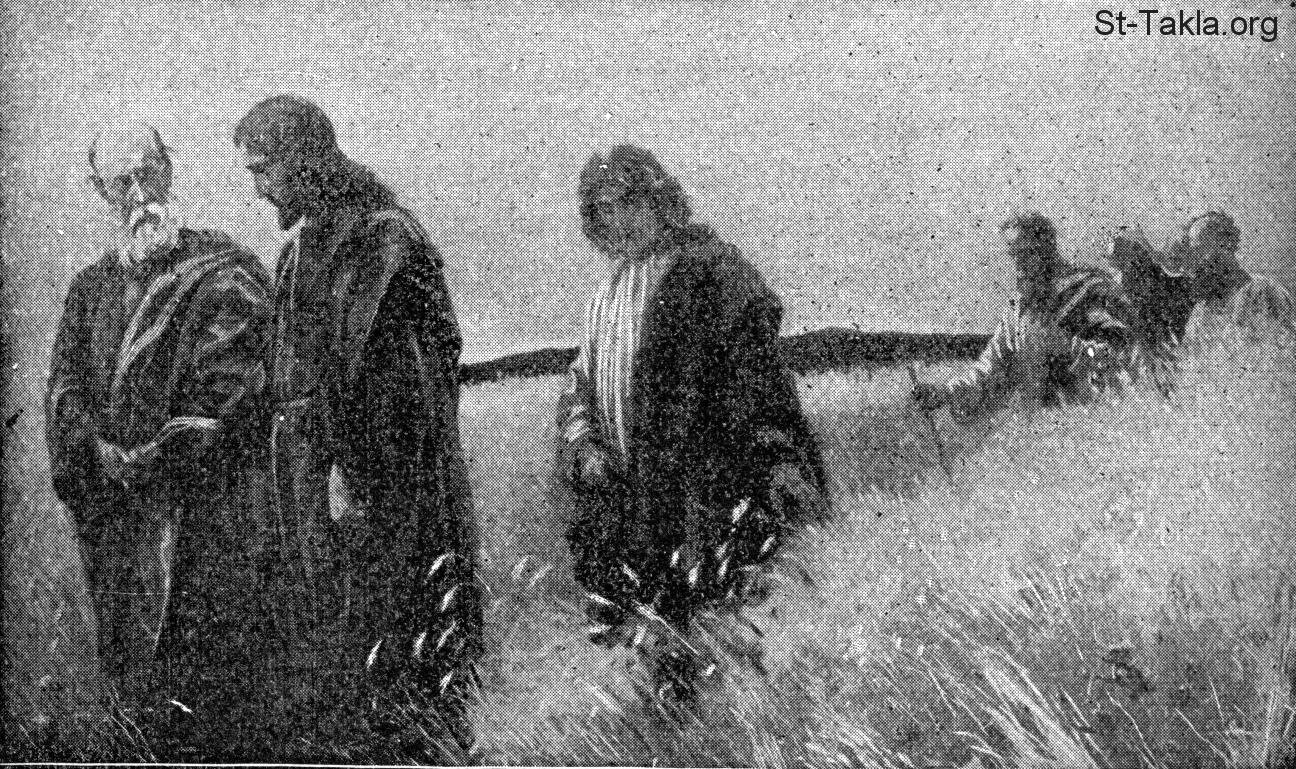
As Jesus was passing through a grain field to another town, his disciples and the crowds were following him, and a group from Jerusalem as well.  The disciples were hungry, so they plucked some grains from the field as they were passing through, and were rubbing them in their hands and eating them.  Some Pharisees who were there complained to Jesus, “Why are your disciples breaking the Sabbath?  They are harvesting grain—that is not legal to do on the Sabbath!”  They were saying this to indicate that Jesus’ teaching was inadequate.

Jesus replied to them, “Meeting people’s needs is more important than following a particular law all the time.  Haven’t you read in Scripture that David once took bread for his hungry men, even though that bread was only supposed to be eaten by priests?  And don’t you know that the priests violate the Sabbath every week, because they do their work of sacrificing on the Sabbath?  God did not create humanity to be ruled by the Sabbath.  Rather, the Sabbath was made for the benefit of people. Therefore, the Son of Man is Lord of the Sabbath.”

Another Sabbath, Jesus was in a synagogue, teaching.  A woman came before him who was bent double.  Jesus called her over and said she was healed and she straightened up.  The leader of the synagogue was upset and called out, “There are six days in which to be healed, but the Sabbath is to be a day of rest.”  Jesus responded, “This woman was oppressed by Satan for eighteen years.  Isn’t it appropriate for her to be healed on a Sabbath day?  And if one of your sheep fell into a hole on the Sabbath, wouldn’t you pull him out again?  So who is more important—a sheep or a human being?”

The next Sabbath Jesus was in a synagogue again.  In the front of the crowd was a man with a withered hand.  The Pharisees were looking carefully to see if Jesus would heal the man on the Sabbath, so they can accuse him of breaking the Jewish law.  Jesus called the man up to the front of the crowd.  He saw the Pharisees staring at him and he became angry.  He said, “Is it legal to do good on the Sabbath, or evil?  It is legal to save a life, or to kill a life?”  No one answered him.  He healed the man in front of them all.  The Pharisees at this point hated Jesus and wanted to destroy him in some way.

At another point, Jesus had cast out a demon.  Some of the Pharisees from Jerusalem were there, and they decided to make an announcement: “It is our official opinion that this man is healing and casting out demons by the power and authority of Satan.”  Jesus said, “You had better watch what you say.  Whatever you say shows the evil that is in you, and everyone will be judged according to every careless word they speak.  If you speak against God, that will be forgiven you.  If you speak against me, that can be forgiven you.  But if you speak evil of the Holy Spirit—that will never be forgiven.

“You know for a fact that I cannot be casting out demons by Satan’s power.  If I am casting out demons, I am in a war against Satan.  Would Satan give me authority to battle against himself, to tear down his own work?  Of course not.  You cannot go into a soldiers house to steal what is his unless you first attack the soldier.  I am only taking these people out of Satan’s control because I am attacking Satan, not helping him.  Since you are speaking lies and evil, we know that you are evil through and through—for what a man has in his heart, that is what he does and says.  By your words you will be right before God, and by your words you will be condemned.”

Jesus’ family was outside when this happened, and they were trying to take him home, because they thought he had lost his mind.  Someone said to him, “Your mother and brothers are outside.”  Jesus replied to him, “The family of God isn’t made up of people who reject God’s work.  My family is right here,“ and Jesus pointed to his disciples, “those who hear the will of God and do it.”

Wednesday, May 2, 2012

The Real Jesus vs. the American Jesus


From Tim Kreider, www.thepaincomics.com