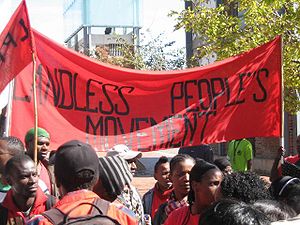
Wednesday, February 16, 2011

"Impious Piety"


God cares for social castoffs.

Jesus compares God to a father who, after waiting day after day at the end of the lane for his disobedient son to return, hugs and kisses him and then throws a party in his honor (Luke 15:11-24).

God is also like a woman who sweeps every crack of her house searching for a lost coin (Luke 15:8)

He can also be compared to a shepherd who trudges over the hill country looking for a weak lamb caught in the thorns (Luke 15:3-5).

Or you can think of Him as a farmer who cared so much about the laborers who only worked an hour that he gave them a full day's wage even when they surely didn't deserve it (Matthew 20:1-16).

Jesus demonstrated this kind of overflowing acceptance when He wines and dines with sinners.

The parables also had a sizzling sting for the religious heavyweights. Your attitude is just the opposite of God's. You are like the elder son who grumbles at the sight of a party thrown for his own brother (Luke 15:25-32).

You are like farmhands who worked all day and then griped after receiving the contracted wage because the latecomers received the same pay (Matthew 20:11-16).

In fact, you are like the tenants of a vineyard who refused to give one of the owner's servants he sent and finally you had the daring audacity to kill his only son (Luke 20:9-16).

Suddenly the tables are turned. The owner will give that vineyard to others. The upside-down theme of eschatalogical reversal permeates other parables. The unexpected happens. The religious leaders forfeit their kingdom card. Sinners have a seat at the party.


-from The Upside-Down Kingdom by Donald B. Kraybill

Abba Agathon's Test


"Going to town one day to sell some small articles, Abba Agathon met a cripple on the roadside, paralysed in his legs, who asked him where he was going. Abba Agathon replied, "To town, to sell some things."

The other said, "Do me the favor of carrying me there." So he carried him to the town.

The cripple said to him, "Put me down where you sell your wares." He did so.

When he had sold an article, the cripple asked, "What did you sell it for?" And he told him the price. The other said, "Buy me some bread," and he bought it.

When Abba Agathon had sold a second article, the sick man asked, "How much did you sell it for?" And he told him the price of that also. Then the other said, "Buy me this," and he bought it.

When Agathon, having sold all his wares, wanted to go, he said to him, "Are you going back?" and he replied, "Yes." Then he said, "Do me the favor of carrying me back to the place where you found me." Once more he picked him up and he carried him back to that place.

Then the cripple said, "Agathon, you are filled with divine blessingd, in heaven and on earth." Raising his eyes, Agathon saw no man, it was an angel of the Lord, come to try him."


-The Sayings of the Desert Fathers, translated by Benedicta Ward

How do we deal with those who are overbearing? People who ask too much? Perhaps we could politely set boundaries, and that's fine. Perhaps we could give what we can and the rest leave to another. Or we can even contact another to help the need.

But if we want to obtain God's blessings, we must do all we can to help the needy, as obnoxious as they are, as ungrateful as they are, as irreligious as they seem, as impolite as they seem. Because they could very well be angels, come to test you.

This very same desert father, Abba Agathon, was asked if he feared death. He replied, "I am but a man, how am I to know if my deeds are acceptable to God?" We must do what we can, and allow God's mercy through Christ to judge us. And we must do the same for others. For who knows, but the obnoxious person asking for food or a ride might be an angel in disguise? (Genesis 18, Hebrews 13:2)

"Sell your possessions and give to the poor" (Luke 12:33)

Thursday, February 10, 2011

What Jesus Really Meant


What Jesus meant when he quoted Isaiah 61 and then said, "Today this scripture is fulfilled in your hearing."

"The land is not to be exploited anymore,
slaves are to be freed,
debts are to be paid,
capital unjustly gained is to be redistributed.
Any political, economic, social or religious structures that perpetuate exploitation must be changed to create a society committed to the reversal of the plight of
the poor (meaning the material poor),
the captives (meaning the dregs),
the blind (meaning the blind)
and the oppressed (meaning the victims).
The provisions of the Jubilee are not spiritual consolation prizes for those who fail to make it here and now, they are specific descriptions of what the here and now is already in process of becoming."
-Robert McAfree Brown, from Unexpected News: Reading the Bible with Third World Eyes

Wednesday, February 9, 2011

Jesus Goes To A Concert


Jesus was invited by one of his disciples to go to a Christian concert one day. As Jesus came in, he saw that many were trying to get the attention of their friends on or behind the stage to let them in.

Jesus turned to those with him and said, “When you go to a concert, don’t try to get up on stage, or else a security person might come and throw you out because you are being disruptive. Instead, stand back, waiting, until your friend behind the stage sees you and says, ‘Hey, you want to come back here?’ and you will be escorted into the stage area. Even so, where God rules, everyone who exalts themselves will be lowered, and everyone who lowers themselves will be exalted.”

Then Jesus said to the one who invited him, “If you go to a concert or have a party, don’t invite your friends or relatives or coworkers. Because they will just invite you to the next event, and so pay you back. Instead, invite the homeless and the handicapped, and people with social and mental disorders. Because they will never be able to pay you back and instead you will gain your repayment from God on the last day.”

One of the people in Jesus’ group heard this and said, “I can’t wait to enjoy the party when God rules!”

Jesus replied, “God’s rule is like a man who was giving a huge, expensive party—a Martha Stewart affair. And there were many who were invited to dress up and come. So he began to call them up and remind them to come. One of those invited said, ‘Oh, I can’t make it, I’ve got to work late.’ Another said, ‘My wife wants me to stay home tonight.’ Another said, ‘I’ve got a business meeting to attend to. Sorry, I can’t come.’ The man became very angry and called a friend of his, ‘These worthless people won’t come. So come with me and let’s bring in the homeless, the handicapped and the mentally and socially disabled.’ After they brought in all of these they could find, there was still room left. So the man told his friend, ‘Okay, let’s go outside of town and invite anyone on the street who happens to be passing by until all the spaces are filled. But not one of those who were invited will even taste of my dinner.’ ”

Because Jesus was a celebrity, he was invited to say a few words on stage to the crowd. “Look, I know that many of you have thought about following me. I just wanted to let you know, if any of you want to follow me, you will have to love me more than you love your spouse or children, more than you love your mother or father, more than you love your brothers or sisters or friends. In fact, if you don’t love me more than you love your own life, you cannot follow me. Anyone who follows me will be punished by those who don’t love me like that, and some of you will be killed—you need to recognize that.

“Look,” Jesus said, “if you are going to paint your house, you want to know how much it will cost ahead of time, don’t you? Because otherwise, you get halfway done and run out of money to buy more paint and anyone passing by laughs at you and says, ‘Look, this guy started something but he couldn’t finish it.’ And the neighborhood association will be at your door and ask you to finish it or to move away.

“Let’s say there’s a general who is calculating the chances he has in a war. If he has ten thousand troops as opposed to the other general who has twenty thousand troops, he had better figure out if he will do war against his enemy or surrender and offer reprisals in order to make peace.

“Even so, recognize, if anyone wants to follow me, he needs to give up his possessions.”

Then Jesus got down and left.


This stuff is in the Bible—really! Read it for yourself— Luke 14:7-33.

Dealing With Temptation


Jesus’ Life:

Matthew 4:1-11
Then the devil took Jesus into the holy city and had Him stand on the pinnacle of the temple, and said to Him, "If You are the Son of God, throw Yourself down; for it is written, 'HE WILL COMMAND HIS ANGELS CONCERNING YOU'; and 'ON their HANDS THEY WILL BEAR YOU UP, SO THAT YOU WILL NOT STRIKE YOUR FOOT AGAINST A STONE.'" Jesus said to him, "On the other hand, it is written, 'YOU SHALL NOT PUT THE LORD YOUR GOD TO THE TEST.'"

Satan tempted Jesus in three ways—1. Using God’s given authority for one’s personal benefit—food. 2. Using God’s promise for the righteous for one’s personal benefit—exaltation. 3. Serving another god in order to attain a righteous goal—Just rule of the earth
Jesus wanted food, he wanted exaltation, he wanted kingship. But he knew that God’s will was more important than anything he might want at any particular time. God promised Jesus that he is the Son of God. Jesus knew that to obtain that promise wouldn’t come from unrighteousness or from seeking things outside God’s will. Jesus retained the one focus of his life—doing God’s will no matter what it took. But in his weakness, he had to rely on God’s word to know what God’s will was. He didn’t know it within himself, in his weakened state. And so he succeeded, because he depended on God.

Mark 8:31-38
And He began to teach them that the Son of Man must suffer many things and be rejected by the elders and the chief priests and the scribes, and be killed, and after three days rise again. And He was stating the matter plainly. And Peter took Him aside and began to rebuke Him. But turning around and seeing His disciples, He rebuked Peter and said, "Get behind Me, Satan; for you are not setting your mind on God's interests, but man's."

Jesus declared what God’s command was: that the son of man will suffer many things; that he would be rejected by the Jewish authorities; that he would be killed; and that he would be risen on the third day. But Peter didn’t understand what God’s command was, all he understood is what the normal method of humanity was. And this is what Jesus wanted to hear, on one level. He wanted to hear that he would not suffer, not be rejected, not be killed. Jesus wanted to be comfortable, to be accepted by everyone, and to live. But God’s will took precedence. So Jesus was harsh with Peter, speaking out the name that was speaking behind Peter. Jesus rejected anything that tried to quietly call him away from God’s will and he dealt with it harshly.

Luke 22:32-46
And He withdrew from them about a stone's throw, and He knelt down and began to pray, saying, "Father, if You are willing, remove this cup from Me; yet not My will, but Yours be done."

Jesus was dealing with the same temptation—to follow God’s will was to be shamed, to suffer, to die. Jesus didn’t want that, he wanted to be comfortable, to live. In his weakness, he prayed and he asked his friends to pray as well. They didn’t do very well, for they were struggling with their own temptations, but Jesus did all he could to walk in God’s way. In the end, God’s strength won out. Jesus struggled so hard, his sweat flowed as thick as blood. He had to prepare himself inwardly for the battle to come. But he was ready, thanks to the preparation the Father gave him.

Our Lives
Mark 9:43-49
"If your hand causes you to stumble, cut it off; it is better for you to enter life crippled, than, having your two hands, to go into hell, into the unquenchable fire."

Everyone will be tested, everyone will be tempted. There’s no getting around it. But there is no reason to wallow in it, to stand in our sin until we are so weak we give in. Jesus commands us—whatever we have that causes us to sin, get rid of it. He is not speaking of body parts, by the way, he already said that the outside of the body doesn’t make one unclean, but our desires within us (Mark 7:18-23). Rather, we need to get rid of anything that stirs in us the desires that cause us to sin. We need to reject anything that drives us into sin—friends that encourage us to do what God commands us not to; thoughts that dwell on sin; places that make it easy to sin. They are just to be rejected.

I Corinthians 10:13
No temptation has overtaken you but such as is common to man; and God is faithful, who will not allow you to be tempted beyond what you are able, but with the temptation will provide the way of escape also, so that you will be able to endure it.

Again, we will all be tempted, we will all face situations that we cannot endure—just like Jesus. But there is a way of escape, there is a way for us not to sin. God, in every situation, offers us a way of escape. We do not have to give in, no matter how hard it seems. Yes, sometimes in order to not sin we have to face suffering, as Jesus did, but doing God’s will is greater than the pleasures and miseries of sin.

Hebrews 12:1-4
Consider Him who has endured such hostility by sinners against Himself, so that you will not grow weary and lose heart. You have not yet resisted to the point of shedding blood in your striving against sin.

To be like Jesus, we have to take sin seriously. Sin isn’t something to be taken lightly, nor is God’s will. We need to be serious and do whatever we can to reject the one and live in the other, even as Jesus did. No, we have not yet resisted sin to such a degree that we have lost our lives; we have not done God’s will to such a degree that we bled for it. But if we endure in Christ, we might have to. In that, we need to be prepared to pay whatever cost to do God’s will.

Examples

Paul knew that it was God’s will for him to take the message of Jesus to the Gentiles. To do that, he faced shipwrecks, stoning, shame, hatred, rejection, long hours of work, and complaining against him by his own brothers and sisters in Christ. In all this, he said, he was the imitation of Jesus.

Anthony lived in Alexandria when all the Christians around him were compromising with the world. Rather than give into that, he lived in a graveyard for years and prayed to the Lord for deliverance. The Lord instead called him to the desert to fight demons. Although he was weak in the end he won and became the father of the monastic movement.

Thomas Aquinas was determined to live as a Dominican monk. His wealthy family insisted that he remain with them and work the family business instead. He refused and ran away to a university. His family found him and kidnapped him, locking him in a room with a prostitute to tempt him to sin. Aquinas refused to sin again and again. Finally his family realized the futility of fighting him and they allowed him to become a monk. Aquinas became the greatest theologian of all time.

Living It Out

Be serious about God’s will
Don’t take God’s will lightly. Do everything you can to know what God’s will is for you and then do all you can to do it. Seek the Lord, listen to the Spirit and do what he says.

Be alert and steel yourself up
Look around for Satan’s traps and devises. Don’t let him catch you by surprise. And prepare yourself daily to suffer whatever necessary to follow God’s will. You won’t suffer every day—most days you won’t. But that is all the more reason why we need to be ready for the struggle when it comes.

Memorize and quote passages from Scripture
Jesus leaned on the word in his weakness, and so must we. Even if we can’t read, we can still listen to the Scriptures and memorize as much of it as possible. Especially memorize the words of Jesus and quote them in times of weakness.

Get rid of the temptation
If someone is tempting you, tell them to knock it off. If you see something that tempts you, walk away. If your thoughts are tempting you with desire, purpose to think about something else—anything holy and good.

Don’t expose yourself unnecessarily to temptation
If you know that someone or some place is going to tempt you to sin, avoid them. No matter what else you were going to do there, whatever benefit you were going to gain, it is not worth risking sin and death.

Pray for deliverance and strength
Always seek God. Pray to him daily for deliverance from the things that cause you to sin. Ask him daily for strength to resist temptation. Ask him to show you the ways of escape he prepared for you. Ask, ask, ask, ask—don’t ever stop.

Lord, have mercy on we who are in darkness, blind. Dissuade us from the way of evil; Give us a longing for righteousness; Convict us by your Holy Spirit; Show us the true light of your Son. May we make a step toward you so that you may provide the increase in single-mindedness we need to gain entrance in your kingdom. Father, open our eyes.

The Good and Bad News of Jesus


Here are some quotes from Walter Pilgrim's Good News to the Poor. This book is, in my opinion, the best book about Jesus' view of the poor and rich written yet, second only to John Chrysostom's sermons to the rich in scope and message. Why is this book out of print? We should all be studying this book in our churches.


The gospel of Mark’s “original intent was not that of a warning to the rich but as a word of promise and hope to the poor. It said something like this, ‘You who are least in the eyes of others and by the measure of earthly standards have the least, you will be abundantly blessed in the age to come.” The coming of God’s kingdom meant the end to their lowly status and God’s vindication of their cause.”

For the anawim, “the social and political life-settings are still there. The situations of distress are still those of literal poverty, persecution, oppression, affliction and the like. The anawim are truly the victims of life and their enemies are powerful and well-to-do. What makes them anawim, is the fact that their hope is in God and their cries reach out to Yahweh with confidence in His promised deliverance.”

“The Lucan birth narratives present the opening drama of a God who puts down the mighty and the rich from their positions of eminence and raises up those of low degree. In these stories the revelation of the new age begun in Jesus Christ is given to the poor and the lowly, as well as the pious and the not so pious…. Luke is here already anticipating the good news to the poor embodied in Jesus’ ministry throughout his Gospel.”

“Jesus’ acceptance of [sinners] into his fellowship points to his creation of a new community of those who were formerly on the outs with God and with other people. In this sense ‘the first will be last and the last first’ and God’s promised eschatological reversal for the poor has already become a reality in the ministry of Jesus.”

About the parable of the Rich Man and Lazarus (Luke 16):
“How could anyone hear the vivid descriptions of the gross discrepancy in social conditions as anything other than a devastating critique against the rich who exploit the poor and live in social luxury, unmindful of the dying beggars at their gate? Moreover, God’s decisive siding with ths poor is not only alluded to in the name Lazarus, i.e., God helps, but in the great reversal which brings moral judgment. For the rich man is not just deprived of his possessions, he is punished (vv. 23-24), while Lazarus enjoys the eschatological blessings of the faithful elect. Hence we conclude that it is not just the great social inequality which results in judgment or blessing, but also the way of life associated with both…. The emphasis on the great disparity between the rich and poor raises the question acutely whether the rich as rich can avoid the eschatological reversal in the coming age.”

“Luke addressed himself to the rich Christians in his day. He does not insist that they give up all their possessions, nor does he require an elimination of all economic differences in the community. But Luke does say this to the rich Christians: ‘Your abundance and the poverty of other Christians are not in accordance with God’s will or with the spirit of Jesus. You must relinquish your abundance for the sake of the poor and work toward greater economic equality…’ ”

Tuesday, February 8, 2011

Fear v. Faith


"Jesus came to us to help us overcome our fear of God. As long as we are afraid of God, we cannot love God. Love means intimacy, closeness, mutual vulnerability, and a deep sense of safety. But all those are impossible as long as there is fear. Fear creates suspicion, distance, defensiveness and insecurity."
-Henri Nouwen

Jesus lived a life without fear. He was able to live without fear because he had full trust in his Father's love and power. He knew of God's ultimate compassion for all in need. And he knew of God's great power to do all things. But Jesus also had one other act of faith-- He was completely confident in His relationship with God. That God would listen to him and accomplish that which he asked.

It is interesting that Jesus only got upset with the disciples when they surrendered to fear instead of faith. And when they lived in fear, Jesus said that the answer to their fear was faith in God's power, God's love and God's desire to intimately relate to us.